

A silent panic attack can hit without warning, even when everything looks fine on the outside. It feels like a sudden wave of anxiety, a racing heart, a tight chest, and overwhelming thoughts, but no one around you may notice it.
A hidden panic attack is a type of panic attack where symptoms stay mostly internal. You may seem calm, but inside, your body is in a full fight-or-flight response.
Many people with high-functioning anxiety deal with these hidden episodes daily. Triggers like stress, overthinking, caffeine, or lack of sleep can set them off. The good news? Simple techniques like deep breathing, grounding methods, and quick mental resets can help you calm your nervous system fast and regain control.
What Is a Silent Panic Attack? (Symptoms, Causes & Key Differences)
A hidden panic attack can feel intense, even if no one else can see it. It happens when your body goes into a panic attack state, but the signs stay mostly inside. You may look calm, but your mind and body feel out of control.
A hidden panic attack is a type of anxiety attack where symptoms like a rapid heartbeat, racing thoughts, and chest tightness happen without visible reactions. It is closely linked to anxiety disorders and high-functioning anxiety.
Silent Panic Attack vs Regular Panic Attack
A regular panic attack is easy to notice. A person may shake, breathe fast, or show fear clearly. In a hidden panic attack, those physical signs are hidden. You may still feel shortness of breath, dizziness, or muscle tension, but you try to hold it in. This makes it harder for others to understand what you are going through.
Silent Panic Attack vs Anxiety Attack
People often confuse a hidden panic attack with an anxiety attack. Both involve stress and worry, but they are not the same. A panic attack is sudden and intense. It comes with a strong fight-or-flight response in the body. An anxiety attack builds slowly. It is linked to ongoing stress, overthinking, or fear.
Understanding this difference helps you respond better. When you know what your body is doing, it becomes easier to manage your symptoms and calm your nervous system.
Silent Panic Attack Symptoms: Hidden Signs You Shouldn’t Ignore
An unseen panic attack often goes unnoticed, but the symptoms are very real. You may look calm on the outside, yet feel overwhelmed inside.
Unseen panic attack symptoms include both emotional and physical changes. These signs can feel intense, even without visible reactions. Many people with high-functioning anxiety deal with these hidden panic attack signs every day.
Emotional Symptoms
- Sudden fear without a clear reason
- Strong sense of doom or danger
- Feeling emotionally overwhelmed
- Feeling disconnected from reality
- Racing thoughts that don’t slow down
- Mind jumping from one worry to another
- Overthinking small things
- Feeling like you are losing control, even when everything seems normal
Physical Symptoms Without Visible Signs
Even if others cannot see it, your body reacts strongly. You may notice a rapid heartbeat or chest tightness. Breathing can feel shallow, leading to shortness of breath.
Some people feel dizziness or lightheadedness. Others may deal with nausea or sweating. Muscle tension is also common, especially in the neck and shoulders.
These physical symptoms come from your nervous system. Your body enters a fight-or-flight response, even when there is no real danger.
Mental & Cognitive Symptoms
Unseen panic attacks also affect how you think. You may experience brain fog or confusion. It becomes hard to focus on simple tasks.
Negative thoughts may take over. You might imagine worst-case scenarios without meaning to. This can increase stress and keep the panic going.
Understanding these symptoms is important. When you recognize them early, you have a better chance of calming your body. It also helps you see that these feelings, while scary, are not harmful.
What Causes Silent Panic Attacks? (Triggers You Need to Know)
A hidden panic attack can start suddenly, even when nothing seems wrong. The real cause is often hidden. An unseen panic attack happens when your body reacts to stress or fear. This triggers the fight-or-flight response in your nervous system. Hormones like adrenaline and cortisol rise quickly, leading to symptoms such as a rapid heartbeat, shortness of breath, and racing thoughts.
Emotional & Psychological Triggers
Your emotions play a big role. Stress is one of the biggest triggers. Ongoing pressure from work, relationships, or daily life can build up.
Overthinking is another common cause. When your mind keeps replaying worries, it puts your body on alert. Suppressed emotions can also trigger a panic attack. If you ignore feelings like anger, fear, or sadness, they may come out suddenly. Past trauma can also be a factor. Even if you are not thinking about it, your body may still react.
Lifestyle Triggers (Sleep, Caffeine, Stress)
Your daily habits matter more than you think. Lack of sleep can make your mind and body more sensitive to stress. This makes panic attacks more likely.
Caffeine is another trigger. Too much caffeine can increase your heart rate and make you feel anxious. This can lead to a silent anxiety attack.
Chronic stress is also a major cause. When your body stays in stress mode for too long, it becomes easier for panic symptoms to appear.
Internal Triggers (Overthinking, Suppressed Emotions)
Some triggers come from within. Overthinking can create fear without a real threat. Your brain starts to imagine danger, and your body reacts.
Holding in emotions is another trigger. When you do not express what you feel, it builds pressure inside. This can suddenly release as a panic attack.
Understanding these causes helps you take control. When you know your triggers, you can manage them better and reduce how often silent panic attacks happen.
How to Stop a Silent Panic Attack Immediately
A hidden panic attack can feel intense, but you can calm it fast with the right steps. The goal is simple: slow your breathing, relax your body, and quiet your mind. These methods help reset your nervous system and reduce the fight-or-flight response. Try them one by one and see what works best for you.
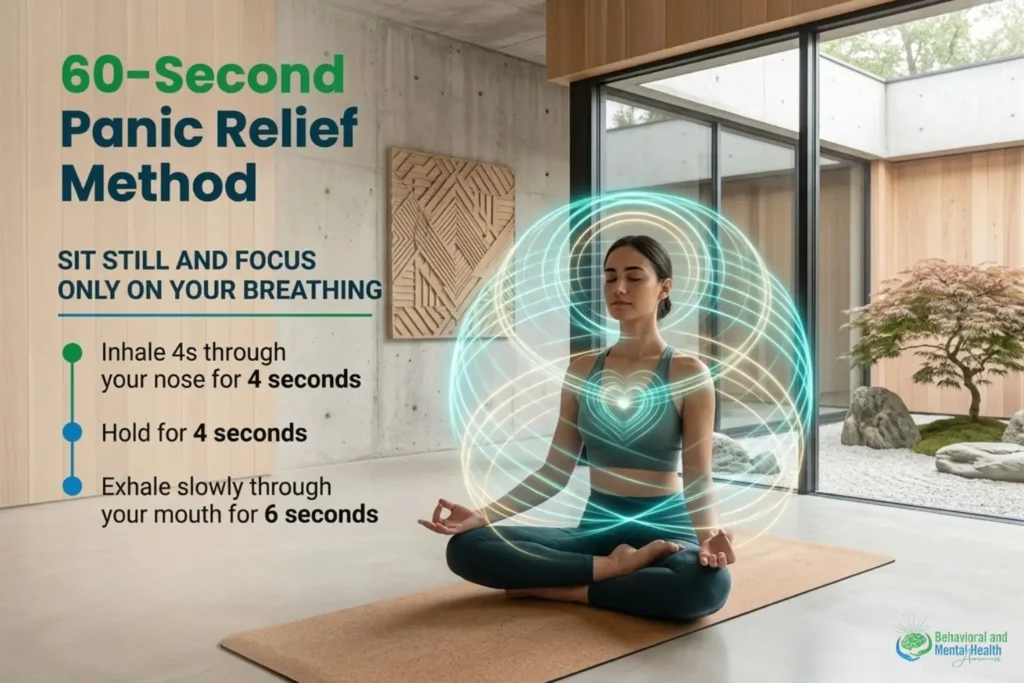
60-Second Calm-Down Technique
Start here when the feeling hits suddenly. Sit still and focus only on your breathing.
- Inhale slowly through your nose for 4 seconds
- Hold for 4 seconds
- Exhale slowly through your mouth for 6 seconds
Repeat this for one minute. This simple deep breathing method helps slow your heart rate and ease chest tightness.
5-4-3-2-1 Grounding Method
This grounding technique brings your mind back to the present moment.
- 5 things you can see
- 4 things you can touch
- 3 things you can hear
- 2 things you can smell
- 1 thing you can taste
It helps stop racing thoughts and reduces anxiety quickly.
Breathing Exercises for Panic Attacks
Your breathing controls your body more than you think. During a panic attack, breathing becomes fast and shallow.
Try this:
- Breathe in slowly through your nose
- Let your belly expand
- Exhale slowly and fully
This signals your brain that you are safe.
Quick Muscle Relaxation Method
Your body holds tension during panic. Relaxing your muscles can calm your mind.
- Tighten one muscle group (like your fists) for 5 seconds
- Release slowly
- Move to the next area (shoulders, legs, etc.)
This reduces muscle tension and helps your body relax.
Thought-Stopping Technique
Panic often grows from negative thoughts.
You can break this cycle.
- Say “stop” in your mind.
- Shift your focus to something real around you
- Remind yourself: “This will pass.s”
This helps control overthinking and brings your mind back to balance. Using these steps regularly can make a big difference. Over time, your body learns to respond calmly rather than in panic.
What NOT to Do During an Unseen Panic Attack
A hidden panic attack can get worse if you react the wrong way. The key is not just what you do, but also what you avoid.
Many people try to fight or ignore the feeling. This often increases anxiety and makes symptoms last longer. Small mistakes can keep your nervous system stuck in a fight-or-flight response.
Avoid Suppressing Your Feelings
It may feel natural to hide what you feel, especially in public. But suppressing emotions can make panic worse.
When you suppress fear or stress, it builds pressure inside your body. This can worsen symptoms such as chest tightness, rapid heartbeat, and muscle tension. Instead, allow the feeling to exist. You do not have to react to it, just notice it without fear.
Don’t Overanalyze Symptoms
One common mistake is overthinking every sensation. You may start asking, “Why is my heart racing?” or “Is something wrong with me?”
This kind of overthinking increases anxiety. It keeps your mind focused on danger, even when there is none.
Remember, these symptoms come from your body’s stress response. They are uncomfortable, but not harmful.
Avoid Isolation in the Moment
Many people pull away from others during a silent panic attack. You may want to be alone or hide what is happening. Isolation can make the experience feel more intense. It gives your thoughts more space to spiral.
If possible, stay around people or in a safe place. You do not need to explain everything. Just being present in a normal environment can help your mind settle. Avoiding these mistakes can help you calm down faster. It also trains your body to handle panic in a healthier way over time.
A unseen panic attack at work or in public can feel scary, but you can manage it without anyone noticing. The goal is to stay calm on the outside while helping your body settle on the inside. These moments often pass faster when you use small, discreet techniques that no one can see.

Discreet Techniques That Work Anywhere
When symptoms start, keep your body still and grounded.
- Press your feet firmly into the ground
- Relax your shoulders slowly
- Loosen your jaw and unclench your hands
These small actions send signals to your brain that you are safe.
You can also control your breathing quietly without drawing attention.
Try slow breathing like this:
- Inhale gently through your nose
- Exhale slowly through your mouth
No one will notice, but your nervous system will start to calm down.
Quick Mental Reset Strategies
Your thoughts can make panic stronger.
So the goal is to shift your focus gently.
Look at something simple around you. It can be a wall, a pen, or a window.
Focus on details like color, shape, or texture.
You can also repeat a calm phrase in your mind:
- “This will pass.”
- “I am safe right now.”
This helps break the cycle of fear and overthinking.
Staying Calm in Social Situations
In public or at work, you may feel pressure to act normally.
But trying too hard can increase stress.
Instead, allow yourself to slow down internally.
You do not need to escape the situation.
If needed, take a short break. Go to the restroom, step outside, or get water.
Even a few minutes of space can help your body reset.
Silent panic attacks in public feel overwhelming, but they are temporary.
With practice, these simple steps can help you stay in control without anyone even noticing.
Long-Term Prevention: How to Stop Silent Panic Attacks Naturally
An unseen panic attack can become less frequent when you build steady daily habits. The goal is to support your nervous system so it reacts less strongly to stress over time.
With small, consistent changes, you can reduce how often these episodes happen and feel more in control of your mind and body.
Daily Habits That Reduce Panic Attacks
Your routine plays a big role in anxiety levels.
- Get enough sleep each night.
- Eat regular, balanced meals.
- Limit caffeine, especially in the afternoon.
- Take short breaks during stressful work.
Simple habits like these help calm your nervous system. They also reduce physical stress in your body. Light exercise, like walking, can also help. It relieves tension and naturally improves mood.
Therapy & Professional Treatment Options
Sometimes self-help is not enough. That is completely normal. Therapy can be very helpful for an unseen panic attack. One common option is Cognitive Behavioral Therapy (CBT). It helps you understand thought patterns that trigger anxiety.
A trained professional can also help you learn coping skills. This includes breathing control, grounding, and emotional regulation.
If symptoms are frequent, professional support can make recovery faster and more stable.
When to Seek Help
You should consider help if:
- Panic attacks happen often
- Symptoms affect your work or daily life
- You feel constant fear of another attack
- Self-help methods are not enough
Getting support is not a weakness. It is a smart step toward recovery.
Over time, with the right habits and support, silent panic attacks can become much easier to manage. Many people even reduce them to rare or no episodes.
Book Now for professional support and take the first step toward calm and control.
Quick Recap: 7 Ways to Stop a Silent Panic Attack Fast
A hidden panic attack can feel overwhelming, but it does not last forever. The right steps can help you quickly calm your mind and body.
Here are the 7 simple ways to take control when it happens:
- Slow your breathing using deep breathing techniques
- Use the 5-4-3-2-1 grounding method to return to the present
- Relax your muscles step by step to release body tension
- Stop negative thoughts with simple mental resets
- Avoid overanalyzing symptoms or fearing them
- Stay grounded in public using discreet techniques
- Build long-term habits like sleep, less caffeine, and stress control
These methods work by calming your nervous system. They reduce the fight-or-flight response and help your body feel safe again.
With practice, you will respond faster and feel more in control during each episode.
Frequently Asked Questions (FAQ)
A hidden panic attack can feel confusing, especially when it happens without clear warning. Here are simple answers to the most common questions.
Can you have a panic attack without showing it?
Yes. A silent panic attack happens inside the body. You may look calm, but feel intense fear, chest tightness, or racing thoughts. This is common in people with high-functioning anxiety.
How long does a silent panic attack last?
Most hidden panic attacks last between a few minutes and 20-30 minutes. The strongest symptoms usually peak quickly and then slowly reduce. Breathing techniques and grounding methods can help shorten the experience.
Are silent panic attacks dangerous?
No, they are not physically dangerous. But they can feel very scary. They come from the body’s stress response, not from real harm. Still, frequent episodes should be checked with a mental health professional.
Why do panic attacks happen for no reason?
It may feel like there is no reason, but there is usually a trigger. Common causes include stress, overthinking, lack of sleep, or caffeine. Sometimes the trigger is hidden or built up over time. Silent panic attacks are manageable. Once you understand them, they become less frightening and easier to control.