
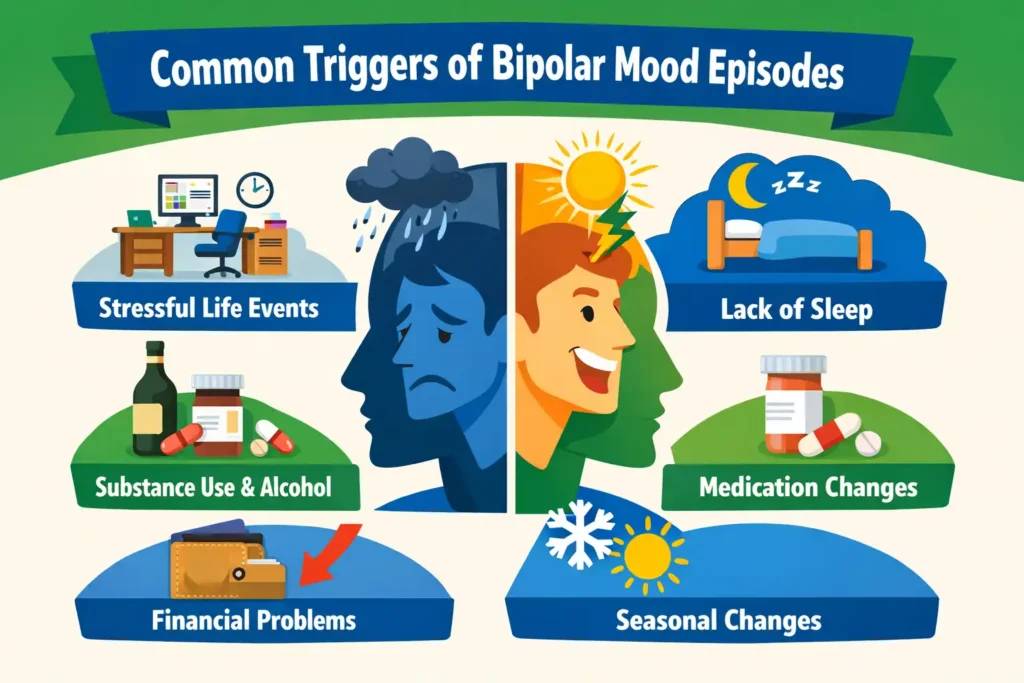
Common triggers of bipolar mood episodes can include stress, lack of sleep, substance use, seasonal changes, and medication problems. These triggers often lead to manic episodes, depressive episodes, or hypomanic symptoms in people with bipolar disorder. Mood instability does not appear without reason. There is usually a pattern behind bipolar mood shifts.
Many people notice that sleep deprivation, life stressors, or alcohol use affect their mental health triggers. Others see early warning signs like changes in energy, racing thoughts, or low motivation. Learning what causes bipolar episodes helps reduce relapse risk. When you can identify patterns, you gain better control over mood swings and protect long-term stability.
What Are Bipolar Mood Episodes?
Bipolar mood episodes are intense periods of emotional and energy changes linked to bipolar disorder. These episodes go beyond normal mood swings. They affect sleep, thinking, behavior, and daily life. Some people feel extremely high and energized. Others feel deeply low and drained. These patterns are tied to mood instability and changes in brain chemistry.
Manic Episodes
A manic episode is a period of very high energy and mood. A person may feel overly confident or restless. Sleep often decreases, yet energy feels high. Racing thoughts are common. Talking may increase. Risky behavior can happen. This is one of the main bipolar disorder symptoms. Triggers like sleep deprivation, stress hormones, or substance use can raise the risk. Without care, mania can disrupt work, school, and relationships.
Hypomania Symptoms
Hypomania symptoms are similar to mania but less severe. Energy rises. Focus may feel sharp. A person may feel unusually productive. Still, mood shifts are noticeable to others. Sleep patterns change. Irritability can appear. Hypomania is part of bipolar mood shifts. It can develop into a stronger manic episode if triggers continue.
Depressive Episodes
A depressive episode feels heavy and slow. Energy drops. Interest in daily life fades. Sleep may increase or decrease. Hopeless thoughts can grow. This stage links to depressive episode causes such as stress, trauma, or seasonal affective changes. Recognizing early warning signs helps lower relapse risk and supports better mood monitoring.
Common Triggers of Bipolar Mood Episodes
Bipolar mood episodes rarely happen without warning. In most cases, there are clear mental health triggers behind the change. These triggers can affect brain chemistry, sleep patterns, and emotional balance. Learning what triggers bipolar mood episodes helps people reduce relapse risk and manage mood instability with more control and awareness.
Stressful Life Events
Stress is one of the most common triggers. Big life stressors can disturb emotional balance. Job pressure, financial anxiety, or relationship stress can all play a role. Stress hormones rise during hard times. This can affect neurotransmitter balance in the brain. For some people, intense stress may lead to manic episode triggers. For others, it may lead to depressive episode causes. Even positive events like a promotion or a wedding can trigger bipolar mood shifts. The body reacts to change, whether good or bad.
Lack of Sleep or Sleep Disruption
Sleep deprivation effects are powerful in bipolar disorder. The brain depends on a steady circadian rhythm. A few nights of poor sleep can increase mood instability. In some cases, lack of sleep can trigger hypomania symptoms or a full manic episode. Racing thoughts may begin after reduced sleep. Energy may rise in an unhealthy way. On the other hand, too much sleep can be connected with depressive episodes. A stable sleep schedule lowers relapse risk and supports mood monitoring.
Substance Use and Alcohol
Alcohol and bipolar disorder do not mix well. Drug use and mood swings are also closely linked. Substances can disturb brain chemicals. They may worsen bipolar disorder symptoms. Alcohol may seem calming at first. Later, it can deepen depressive episodes. Stimulants can increase manic episode triggers. Substance-induced mood disorder is a real concern. Regular use raises the risk of unstable bipolar mood shifts.
Medication Changes or Missed Doses
Medication noncompliance is another major trigger. Missing doses or stopping medication suddenly can disturb mood stability. Antidepressant-induced mania can happen in some cases. A doctor should always guide changes in treatment. Treatment adherence plays a strong role in relapse prevention. Even small medication changes can affect emotional regulation problems.
Seasonal Changes and Routine Disruption
Seasonal affective changes affect many people with bipolar disorder. Longer daylight hours may increase manic symptoms. Dark winter months may increase the risk of depressive episodes. Routine disruption also matters. Travel, night shifts, or sudden schedule changes can disrupt circadian rhythms. A steady routine supports emotional balance and lowers the risk of relapse.
Emotional and Environmental Triggers
Emotional and environmental triggers play a strong role in bipolar mood shifts. These triggers are often part of daily life. They may not look serious at first. Still, they can disturb emotional regulation and increase mood instability. For many people with bipolar disorder, outside pressure slowly builds until bipolar disorder symptoms become more noticeable.
Work Pressure and Burnout
Work pressure is a common mental health trigger. Long hours and constant deadlines increase stress hormones. Over time, this can affect neurotransmitter balance. Sleep patterns may change. Irritability can rise. Burnout may act as a manic episode trigger. In other cases, it may lead to depressive episodes. Mood swings are often part of long-term work stress.
Financial Stress
Money problems can create ongoing sources of stress. Financial anxiety keeps the mind active all the time. Racing thoughts may appear at night. Sleep deprivation effects may follow. Poor sleep increases relapse risk. Worry can also deepen the causes. Stable planning and support can reduce some of this pressure.
Trauma or Past Emotional Wounds
Past trauma can act as a strong emotional trigger. Painful memories may bring sudden bipolar mood shifts. Trauma may also increase comorbid anxiety. Anxiety can worsen mood instability. Therapy for bipolar disorder often focuses on healing these emotional wounds.
Overstimulation and Social Overload
Too much noise, activity, or social pressure can disturb mood balance. Some people feel energized at first. Later, hypomania symptoms or exhaustion may follow. Mood monitoring helps identify patterns. Knowing your limits supports relapse prevention and emotional stability.
Physical Health Triggers
Physical health plays a key role in bipolar mood episodes. The body and brain are closely connected. Changes in hormones, chronic illness, or poor diet can all affect mood stability. Even small shifts in physical health can trigger mood swings, underscoring the importance of monitoring both your body and your mind.
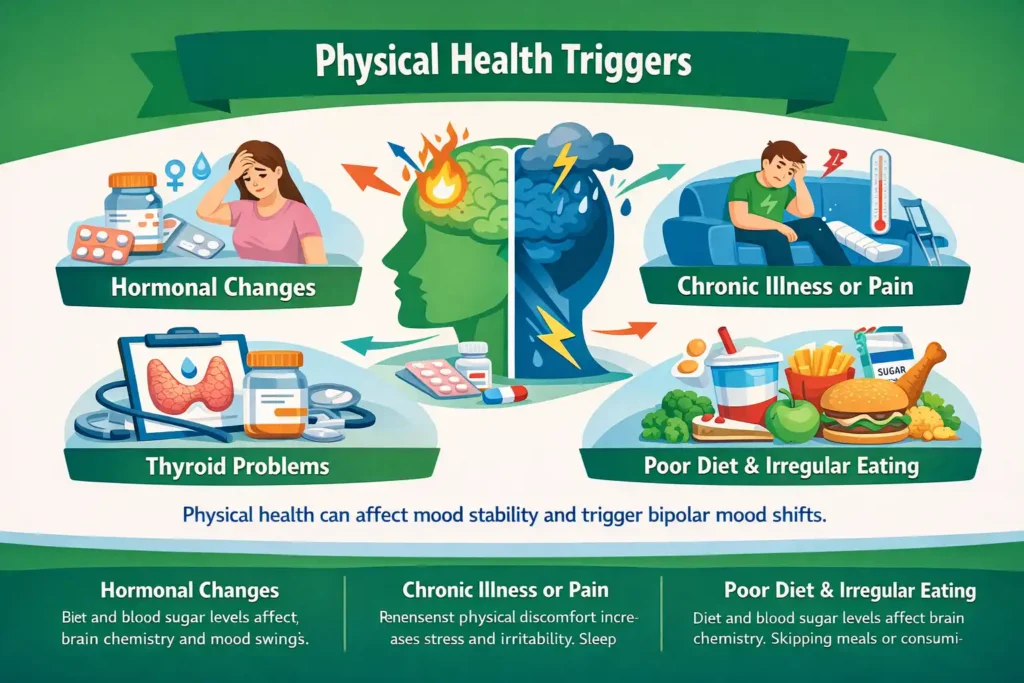
- Hormonal Changes: Hormonal changes can affect neurotransmitter balance and mood regulation. For example, thyroid problems or menstrual cycle changes may contribute to the causes of depressive episodes. Some people notice that energy and motivation shift with hormone fluctuations. Paying attention to these patterns can help manage mood instability.
- Chronic Illness or Pain: Chronic illness and ongoing pain are common triggers. Persistent physical discomfort increases stress and irritability. Sleep disruption often follows. This combination can lead to depressive episodes or even hypomanic symptoms in some cases. Treating underlying conditions and managing pain carefully supports emotional stability.
- Thyroid Problems: Thyroid issues can mimic or worsen bipolar disorder symptoms. Hypothyroidism may cause fatigue and low mood, linked to depressive episode causes. Hyperthyroidism may increase energy and irritability, sometimes triggering manic episodes. Regular check-ups help identify these triggers early.
- Poor Diet and Irregular Eating: Diet and blood sugar levels affect brain chemistry. Skipping meals or consuming too much sugar may contribute to mood swings. Nutrient deficiencies can worsen the causes of depressive episodes. Eating balanced meals at regular times supports emotional regulation and reduces the risk of relapse.
Keeping an eye on physical health, getting regular check-ups, and maintaining a healthy routine can help reduce the chance of bipolar mood episodes and improve overall mental well-being.
Early Warning Signs Before an Episode
Recognizing early warning signs can help prevent full-blown bipolar mood episodes. These signs often appear before manic, hypomanic, or depressive episodes. Paying attention to changes in energy, sleep, thoughts, and behavior helps improve mood monitoring. When noticed early, steps can be taken to reduce relapse risk and manage mood instability.
Changes in Sleep Patterns
Sleep disruption is one of the first signs of an upcoming episode. Too little sleep can trigger hypomania symptoms or a manic episode. Too much sleep may indicate a depressive episode. Tracking sleep helps identify patterns and alerts a person before mood swings worsen.
Sudden increases in energy or motivation may signal hypomania or mania. Conversely, a drop in energy or feeling unmotivated can signal a depressive episode. These changes are often subtle at first, so paying attention to daily routines is important.
Racing Thoughts or Irritability
Racing thoughts often appear before a manic episode. A person may feel restless or easily annoyed. Irritability is also common before depressive episodes. Noticing these signs early helps people take measures to stabilize their mood.
With depressive episodes, loss of interest in usual activities is common. Social withdrawal and reduced engagement in hobbies or work are early warning signs. Recognizing these changes can help individuals use coping strategies, reach out for support, or adjust their treatment to prevent full episodes.
Monitoring these signs regularly supports better emotional regulation, reduces relapse risk, and strengthens overall mental health. Early attention is key to managing bipolar disorder effectively.
How to Reduce the Risk of Bipolar Mood Episodes
Managing bipolar disorder involves more than just medication. Identifying triggers, monitoring mood patterns, and maintaining healthy habits can all help reduce the chance of episodes. Small daily steps often make a big difference in mood stability. Consistency and awareness are key to keeping mood swings under control.
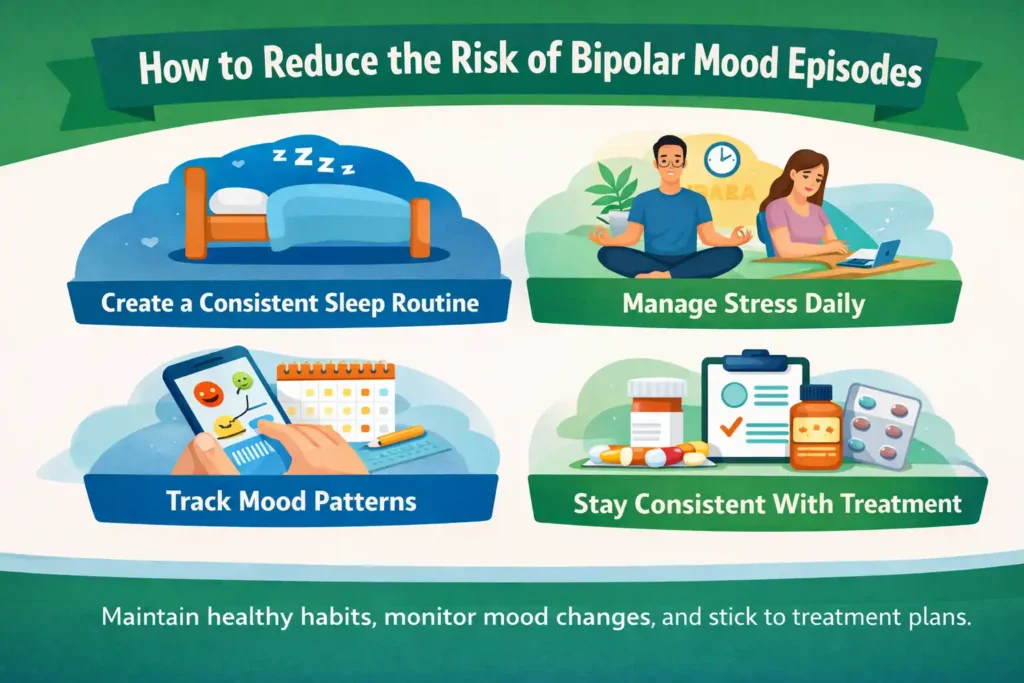
Create a Consistent Sleep Routine
A steady sleep schedule supports the brain’s circadian rhythm. Going to bed and waking up at the same time each day helps prevent the effects of sleep deprivation. This can lower the risk of manic episode triggers and reduce depressive episode causes. Quality sleep improves overall emotional regulation and mood stability.
Manage Stress Daily
Daily stress management is essential. Short breaks, breathing exercises, or mindfulness activities help reduce stress hormones that can affect neurotransmitter balance. Reducing ongoing stressors lowers relapse risk and supports mental health triggers.
Using a mood journal or app helps track emotional changes. Recording sleep, energy levels, and daily events can reveal patterns before mood shifts occur. Mood monitoring allows early intervention and better control over bipolar mood shifts.
Taking medication as prescribed and attending therapy sessions is crucial. Antidepressant-induced mania or medication noncompliance can trigger episodes. Consistent treatment supports emotional balance and reduces the risk of episode relapse.
When to Seek Professional Help
If early warning signs appear, contact a mental health professional promptly. Therapy for bipolar disorder can address trauma, stress, and emotional regulation problems. Early intervention helps prevent full-blown manic or depressive episodes and strengthens long-term stability.
Frequently Asked Questions (FAQs)
Many people with bipolar disorder and their loved ones have common questions about triggers, mood episodes, and ways to manage them. Understanding these questions helps improve awareness and supports better emotional regulation. Clear answers also make it easier to notice early warning signs and reduce relapse risk.
Can Stress Alone Trigger Bipolar Mood Episodes?
Yes, stress is one of the strongest bipolar mood episode triggers. Both negative and positive stressors can disturb neurotransmitter balance. Prolonged stress may lead to hypomanic symptoms, manic episodes, or depressive episodes. Learning stress management techniques helps lower relapse risk.
Do Seasons Really Affect Bipolar Disorder?
Seasonal affective changes can influence mood instability. Longer daylight hours may increase manic episode triggers, while shorter days can increase depressive episode causes. People often notice shifts in energy, motivation, or sleep patterns during seasonal changes.
How Long Do Mood Episodes Usually Last?
The length of a mood episode varies. Manic or hypomanic episodes can last days to weeks. Depressive episodes may last weeks or months. Early recognition of warning signs and consistent treatment can shorten episodes and reduce their impact.
Can Triggers Be Prevented Completely?
Triggers cannot always be fully avoided, but their effects can be reduced. Monitoring mood, maintaining sleep routines, managing stress, and following treatment plans help minimize the intensity and frequency of episodes.
What Are the Early Signs I Should Watch For?
Early signs include changes in sleep, energy, motivation, and social behavior. Racing thoughts, irritability, loss of interest, or withdrawal may signal an upcoming episode. Tracking these signs supports better mood monitoring and relapse prevention.