
The best inpatient mental health facilities in Arizona offer 24/7 care, licensed psychiatrists, and proven therapies like CBT and DBT. These centers treat conditions such as depression, anxiety, bipolar disorder, PTSD, and substance use disorder in a safe, structured setting.
If you or someone you care about is struggling, finding the right place can feel confusing. Each inpatient mental health facility is different. Some focus on crisis stabilization, while others provide long-term residential treatment. The goal is simple: to help you feel stable, safe, and supported. In this guide, you will learn how these facilities work, what treatments they offer, and how to choose the best option based on your needs, budget, and insurance.
Quick Comparison of the Best Facilities in Arizona
Top inpatient centers provide round-the-clock support, experienced mental health professionals, and evidence-based treatments. They create a safe, structured environment where patients feel supported, build stability, and make real progress toward long-term mental wellness and recovery.
What Makes a Facility Stand Out
Not all centers are the same. A good Inpatient Mental Health Facility should feel safe and calm. It should have trained experts, such as a Psychiatrist and a Clinical Psychologist. These professionals guide you step by step.
Top centers in Arizona also use proven therapies. For example, Cognitive Behavioral Therapy helps you change negative thoughts. Dialectical Behavior Therapy helps you manage strong emotions. Many places also offer group and individual therapy sessions.
What Conditions Do They Treat
Most facilities treat common mental health issues. These include Major Depressive Disorder, Generalized Anxiety Disorder, and Bipolar Disorder. Some centers also handle serious cases like Post-Traumatic Stress Disorder and Substance Use Disorder.
Why Comparison Matters
A quick comparison helps you choose better. Some centers are best for crisis care. Others focus on long-term healing. Look at services, staff, and treatment style. Also, check whether they accept insurance such as Medicaid or Medicare. Choosing the right place can make a big difference. It can help you feel stable, supported, and ready to recover.
Top Inpatient Mental Health Facilities in Arizona
The best facilities provide expert care, a safe and supportive environment, and proven treatment plans tailored to each person. Every center takes a unique approach, helping individuals stabilize, build coping skills, and move forward with confidence in their recovery journey.
Leading Centers You Can Trust
Many top centers provide full-time care. A good Inpatient Mental Health Facility offers 24/7 support. You stay in a structured place where help is always available. Most centers have a team of experts. This includes a Psychiatrist, a Clinical Psychologist, and trained nurses. They work together to create a plan just for you.
Treatments and Support Offered
Top facilities use proven methods. Cognitive Behavioral Therapy helps you control negative thinking. Dialectical Behavior Therapy teaches you how to handle stress and emotions. You may also join group therapy or one-on-one sessions. Many centers also provide Medication Management. This helps balance symptoms and improve daily life.
Who do these facilities help?
These centers treat serious conditions. This includes Major Depressive Disorder, Bipolar Disorder, and Post-Traumatic Stress Disorder. They also help people with Substance Use Disorder and dual diagnosis cases. Each facility has its own focus. Some are best for crisis care. Others support long-term recovery. Choosing the right one depends on your needs, comfort, and treatment goals.
How to Choose the Right Inpatient Mental Health Facility
Choosing the right inpatient mental health facility depends on your symptoms, personal needs, and required level of care. The right environment, support system, and treatment approach can help you stabilize, feel safer, and move toward recovery with more confidence and consistency.
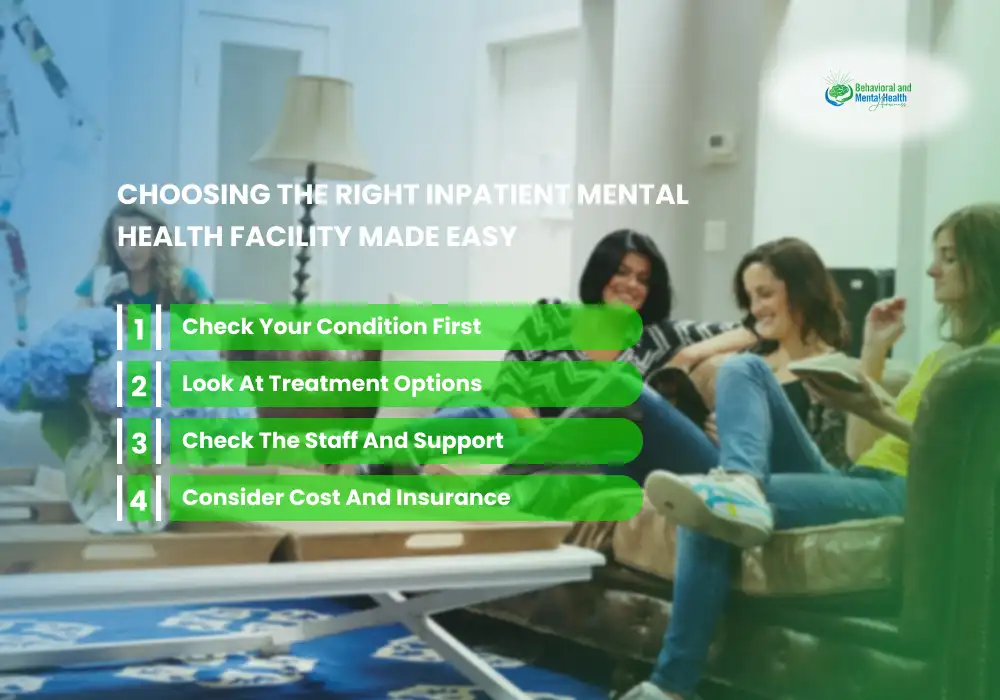
- Check Your Condition First: Start with your diagnosis. Different centers treat different issues. For example, some focus on Major Depressive Disorder or Generalized Anxiety Disorder. Others specialize in Bipolar Disorder or Post-Traumatic Stress Disorder. If addiction is involved, look for support for Substance Use Disorder.
- Look at Treatment Options: A strong Inpatient Mental Health Facility should offer proven care. Cognitive Behavioral Therapy helps change negative thoughts. Dialectical Behavior Therapy helps manage emotions. Many places also offer group and individual therapy. Ask if they provide Medication Management for better results.
- Check the Staff and Support: Good care comes from skilled people. Look for a Psychiatrist and a Clinical Psychologist on the team. Also, check if nurses are available all day. This ensures you get help anytime you need it.
- Consider Cost and Insurance: Treatment can be costly. So, check if the center accepts plans like Medicaid or Medicare. This can reduce your expenses.
Choosing the right inpatient mental health facility means checking your condition, treatment options, skilled staff, and insurance coverage. The right center ensures safety, support, effective therapy, and a smoother recovery.
Conditions Treated in Inpatient Mental Health Facilities
These facilities provide round-the-clock care for serious mental health conditions. Patients receive constant support, structured routines, and professional treatment. This helps reduce symptoms, improve stability, and create a safe space where individuals can begin recovery and regain control of their daily lives.
Common Mental Health Conditions
Most inpatient mental health facilities treat a wide range of issues. One of the most common is Major Depressive Disorder. It can make daily life feel heavy and hard. Many people also struggle with Generalized Anxiety Disorder. This causes constant worry and stress.
Another serious condition is Bipolar Disorder. It leads to extreme mood changes. Some patients deal with trauma-related issues like Post-Traumatic Stress Disorder. This can affect sleep, mood, and daily function.
Addiction and Dual Diagnosis
Many centers also treat Substance Use Disorder. This means a person struggles with drugs or alcohol. In some cases, mental illness and addiction happen together. This is called Dual Diagnosis. These cases require close monitoring and special care.
Why Inpatient Care Helps
Inpatient care gives 24/7 support. Patients stay in a safe place with trained staff. They receive therapy, medical care, and daily guidance. This helps them manage symptoms and feel more in control. With the right care, many people start to feel better. They learn how to cope and slowly return to a normal life.
What to Expect During Inpatient Mental Health Treatment
Inpatient care offers a safe and structured environment where you follow a daily routine and receive constant support. Trained professionals are available around the clock, helping you manage symptoms, build coping skills, and feel more stable each day.
- Admission and First Steps: Your stay starts with a Psychiatric Evaluation. A Psychiatrist checks your symptoms and needs. This helps create a simple care plan. The goal is to stabilize your condition and make you feel safe.
- Daily Routine and Therapy: Each day follows a set schedule. This helps bring structure to your life. You may attend Individual Therapy and Group Therapy sessions. These help you share, learn, and heal. Many centers also use Cognitive Behavioral Therapy and Dialectical Behavior Therapy. These methods teach you how to manage thoughts and emotions. If needed, doctors provide Medication Management to control symptoms.
- Support and Safety: You will have 24/7 care in a secure place. This is called 24/7 Supervision. Nurses and staff are always there to help. This is very important during crises.
- Length of Stay: It depends on your condition. Some people stay a few days. Others may need a few weeks. The focus is always on recovery and stability.
Inpatient care offers a safe, structured environment with daily therapy, 24/7 supervision, medication management, and expert support. Length of stay varies, with a focus on stability, recovery, and emotional healing.
Cost of Inpatient Mental Health Treatment in Arizona
The cost of inpatient care can vary based on services, length of stay, and facility type. Understanding these factors helps you plan better. Many centers provide flexible payment options, insurance support, and personalized plans to match different budgets and care needs.
Average Cost Range
Inpatient treatment in Arizona usually costs between $5,000 and $30,000 per month. The exact price depends on the facility, length of stay, and type of care. Luxury centers or specialized programs may be higher, while some residential treatment centers are more affordable.
Insurance and Payment Options
Many centers accept insurance such as Medicaid, Medicare, or private plans, such as Blue Cross Blue Shield. Insurance can cover a large part of the cost. Some facilities also offer financial assistance or sliding-scale fees for people paying out of pocket.
Hidden Costs to Consider
Other costs may include lab tests, medications, or additional therapies. Ask the center about what’s included in the price. Knowing this upfront prevents surprises and helps you focus on recovery.
Choosing a facility that fits your budget ensures you can complete treatment without stress. Balancing quality care with affordability helps you get the support you need and stay committed to recovery. With the right planning, inpatient care can be both effective and manageable, giving you a safe space to heal and build lasting mental health skills.
Inpatient vs Outpatient Mental Health Treatment
Inpatient and outpatient care meet different needs. Inpatient treatment offers full-time support in a structured setting. Outpatient care lets you stay at home while attending sessions. Understanding these differences helps you choose the option that fits your condition and daily life.
What Inpatient Care Offers
A good Inpatient Mental Health Facility provides 24/7 support. You stay at the center and receive full-time care. Treatments include Cognitive Behavioral Therapy, Dialectical Behavior Therapy, group sessions, and Medication Management. This is best for severe conditions, crises, or dual diagnosis cases.
What Outpatient Care Offers
Outpatient programs let you live at home while attending scheduled therapy and medical appointments. They are flexible and cost less. Patients can see a Psychiatrist or Licensed Therapist regularly. This works for mild-to-moderate conditions or as a follow-up after inpatient treatment.
Key Differences
| Feature | Inpatient | Outpatient |
| Supervision | 24/7 | Limited |
| Stay | Live at the facility | Go home daily |
| Cost | Higher | Lower |
| Best For | Severe, crisis, dual diagnosis | Mild to moderate, ongoing care |
Why the Choice Matters
Choosing the right type ensures safety and recovery. Inpatient care gives structure and immediate help, while outpatient care provides flexibility and support at home. Knowing your needs makes it easier to pick the best option.
Best Facilities by Category
Not all inpatient facilities are the same. Some are better for certain conditions, budgets, or treatment styles. Knowing the categories helps you pick the right one.
- Best for Severe Depression: These centers focus on intensive care for Major Depressive Disorder. They provide round-the-clock supervision, individual therapy, group sessions, and Medication Management to stabilize symptoms quickly.
- Best for Dual Diagnosis: Some facilities specialize in treating both mental illness and Substance Use Disorder. They offer a combination of Cognitive Behavioral Therapy, detox programs, and ongoing counseling. These centers ensure patients get help for both conditions safely.
- Best Luxury Facility: Luxury inpatient centers focus on comfort, private rooms, and specialized therapies. They still provide 24/7 care with a team of psychiatrists and clinical psychologists, but the environment is more relaxing and supportive.
- Most Affordable Option: Some residential treatment centers are budget-friendly without cutting quality. They provide essential care, therapy, and supervision, often accepting Medicaid or Medicare. These centers focus on recovery first and cost second.
Choosing a facility by category saves time and ensures you get care suited to your needs. It makes recovery smoother, safer, and more effective.
When Should You Consider Inpatient Mental Health Care
Inpatient mental health care is ideal for those needing round-the-clock support and close supervision. It provides a structured, safe setting where individuals can stabilize, receive consistent care, and focus on recovery without outside stress or daily life pressures.
Signs You May Need Inpatient Care
If you feel unsafe with your thoughts or behaviors, it’s time to consider a Inpatient Mental Health Facility. Severe depression, extreme anxiety, or constant mood swings, like in Bipolar Disorder,r may require full-time monitoring. People with Post-Traumatic Stress Disorder or those struggling with Substance Use Disorder also benefit from inpatient treatment.
Situations That Require Immediate Care
- Risk of self-harm or harming others
- Inability to manage daily life
- Failed outpatient treatment
How Inpatient Care Helps
A structured routine, therapy sessions, and Medication Management help stabilize symptoms. 24/7 supervision ensures safety. With consistent support, patients learn coping skills and slowly regain control over their lives.
Seeking care early prevents crises from worsening. It also shortens recovery time and improves long-term outcomes. If any of these signs apply, inpatient care can be a life-changing step toward stability and better mental health.
Get Help Today
Taking the first step toward mental health care can feel overwhelming. Inpatient facilities in Arizona provide a safe, structured environment where you can get support without delay. With professional care and clear guidance, you can begin feeling stable, supported, and more in control.
Why You Should Act Now
If you or a loved one is struggling with Major Depressive Disorder, Bipolar Disorder, Post-Traumatic Stress Disorder, or Substance Use Disorder, timely care can prevent the situation from getting worse. Early intervention improves recovery outcomes and provides safety and structure.
How to Reach a Facility
Most facilities offer multiple ways to get help:
- Call the center (945-444-0880) directly for an assessment
- Fill out an online form for consultation
- Book an appointment online for quick admission
- Ask about insurance coverage for faster processing
What to Expect After Reaching Out
Once you contact a facility, a Psychiatrist or Licensed Therapist will guide you. They will explain the treatment plan, length of stay, and what to bring. You’ll be admitted into a supportive environment where staff provide 24/7 care and structured therapy.
Booking your admission today ensures you get timely care. Inpatient facilities provide safety, expert guidance, and a structured path toward recovery. Reaching out and booking an appointment is the first step toward feeling better and regaining control of your life.
Frequently Asked Questions
These are common questions people have when considering inpatient care. Getting clear answers helps you make the right choice.
What Is the Average Stay in Inpatient Mental Health Care?
Most patients stay from a few days to a few weeks. The length depends on your condition, treatment plan, and progress. Centers provide individualized care so you get the right support until you are stable.
Does Insurance Cover Inpatient Treatment?
Many facilities accept insurance such as Medicaid, Medicare, and private plans, including Blue Cross Blue Shield. Coverage varies, so always check before admission.
Can I Use Online Therapy Instead?
Outpatient or online therapy is useful for mild-to-moderate conditions. But for severe cases, crises, or Dual Diagnosis, inpatient care is safer and more effective.
Is Inpatient Treatment Safe?
Yes. Facilities provide 24/7 supervision, structured routines, and professional staff, including a psychiatrist, a clinical psychologist, and nurses. The environment is controlled to ensure safety.
How Do I Prepare for Admission?
Bring a list of current medications, important documents, and personal items. Be ready to share your medical history and mental health concerns with the team. This helps staff create the most effective plan for you.